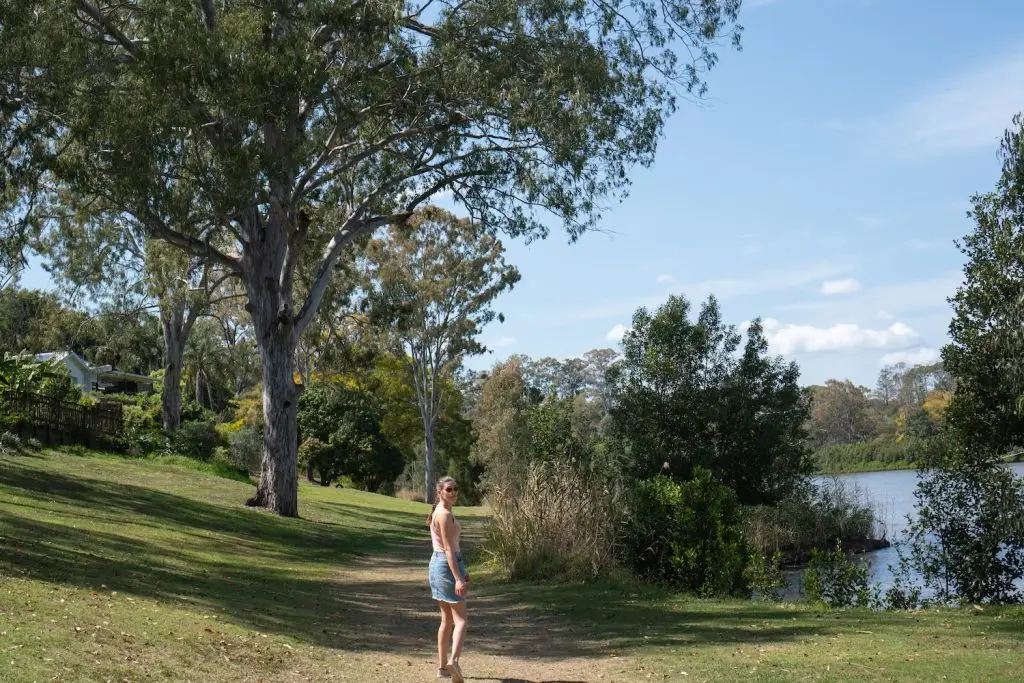
Walking meditation is great for those navigating the world with neurodivergence or traumatic backgrounds.
And it’s not just ND and trauma, plenty of modern patterns lead to the common issue of a buzzing brain. So many of us are told that if only we could meditate we’d get over our anxiety and overthinking, and in the same breath those unhelpful people exclaim about how impossible it will be someone for like us. You can’t sit still, so you should go try to force yourself to sit still for a while. You might get better at sitting still with practice … but what about your brain?
What if you could “do” meditation in a different way?
What is meditation anyway?
To answer this question we should start with a definition of meditation. The general word encompasses a huge range of practices that involve presence, awareness, concentration, and other states of mind. Under this umbrella you’ll find a lot of practices that involve mild (or not) dissociation, relaxation into trance, and the need to be brought back to reality afterwards.
Sitting still isn’t required, even in traditional meditation
Even ancient practices included walking and other types of moving meditation. Movement that is rhythmic works well and some can be like dancing. Walking is my favourite because this motion can be entirely rote or you can bring thought to it — perfect for brain training.
Walking meditation is a “friendly” practice
I call walking mediation “friendly” as a shorthand for being “possibly more appropriate”. Trauma-friendly, ADHD-friendly, autism-friendly, AuDHD-friendly…
Four ways walking works better
(1) The body is moving, or alternating stillness and movement. No need to keep a stiff spine or suppress twitches.
(2) Somatic awareness focuses on the extremities rather than core or breath. Sometimes too much concentration on breathing can make folks feel lightheaded or queasy.
(3) Reinforces and centres present reality. No need to transcend anything.
(4) Eyes are open. Well, we may do an experiment with eyes closed in a safe way but you don’t need to close down your eyes. Your internal safety system might feel better being able to continue scanning.
(5) Easily applied in real life. You aren’t working at getting better at sitting on a cushion, you’re working on your day to day life.
Group meditation classes are also easier with walking
Group instruction experiences can be threatening to sensitive nervous systems in vague or overt ways. In a Wise Body group class, the emphasis is on each person’s individual experience with no expectation of a matching each other. There’s no way to do it wrong and no “corrections” are provided in the class. Students can spread out from each other and each goes at their own pace. And while the opportunity is given for sharing afterwards, it is truly optional.
Come practice walking meditation in Sydney
To see the schedule of classes at Centennial Park, go to Meetup. (No longer active; this group met from 2023-2025.)

